About the project
Luna is a web-based space education tool
Luna Space Simulator is a free browser-based gravity sandbox, and I build it myself. If you want updates on where it goes next, my social profiles are below; I post mostly about Luna and about robotics.
What is Luna?
Luna is an interactive model of space. Open the Solar System, change a planet's mass, add a star of your own, and watch what that does to every other orbit. A map of known exoplanets lets you travel out to real systems. Guided lessons run inside the simulator, so the explanation sits next to the thing it explains.
The web version runs in any modern browser with JavaScript and WebGL. You open a URL and it starts; saves and preferences live in that browser's local storage.
Every mass pulls on every other mass
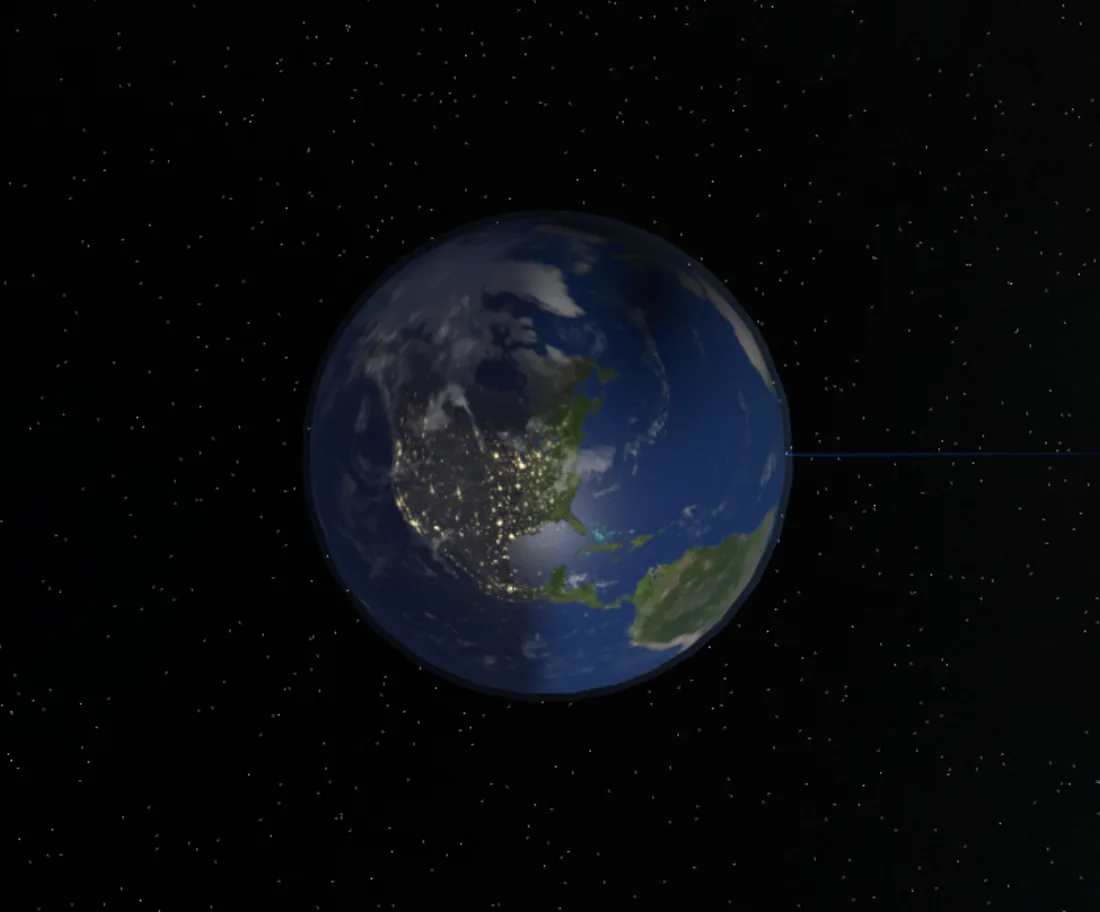
Luna's central rule is that every massive body pulls on every other one. Planets, stars, moons, and anything you add exchange forces every frame, so a heavy enough object will visibly drag an existing orbit off course. Outcomes are computed as you watch, which is why the same starting scenario can end differently once you change something.
Some views use numerical and visual approximations so that a large system still runs at interactive speed on ordinary hardware. Where a model has limits, the educational material says so.
Who is Watermelonson?
Watermelonson is the literal translation of my surname. I build and maintain Luna on my own, from the physics engine through to the lessons.
You can find me on GitHub, YouTube, Bluesky, Instagram, and the Watermelonson newsletter.
Where to start
- Read How orbits work, then test the explanation in Luna.
- Explore Kepler-16, a real system with a planet orbiting two stars.
- Open the 2026 solar eclipse investigation for a prediction-and-observation activity.
- Read Luna's privacy policy.